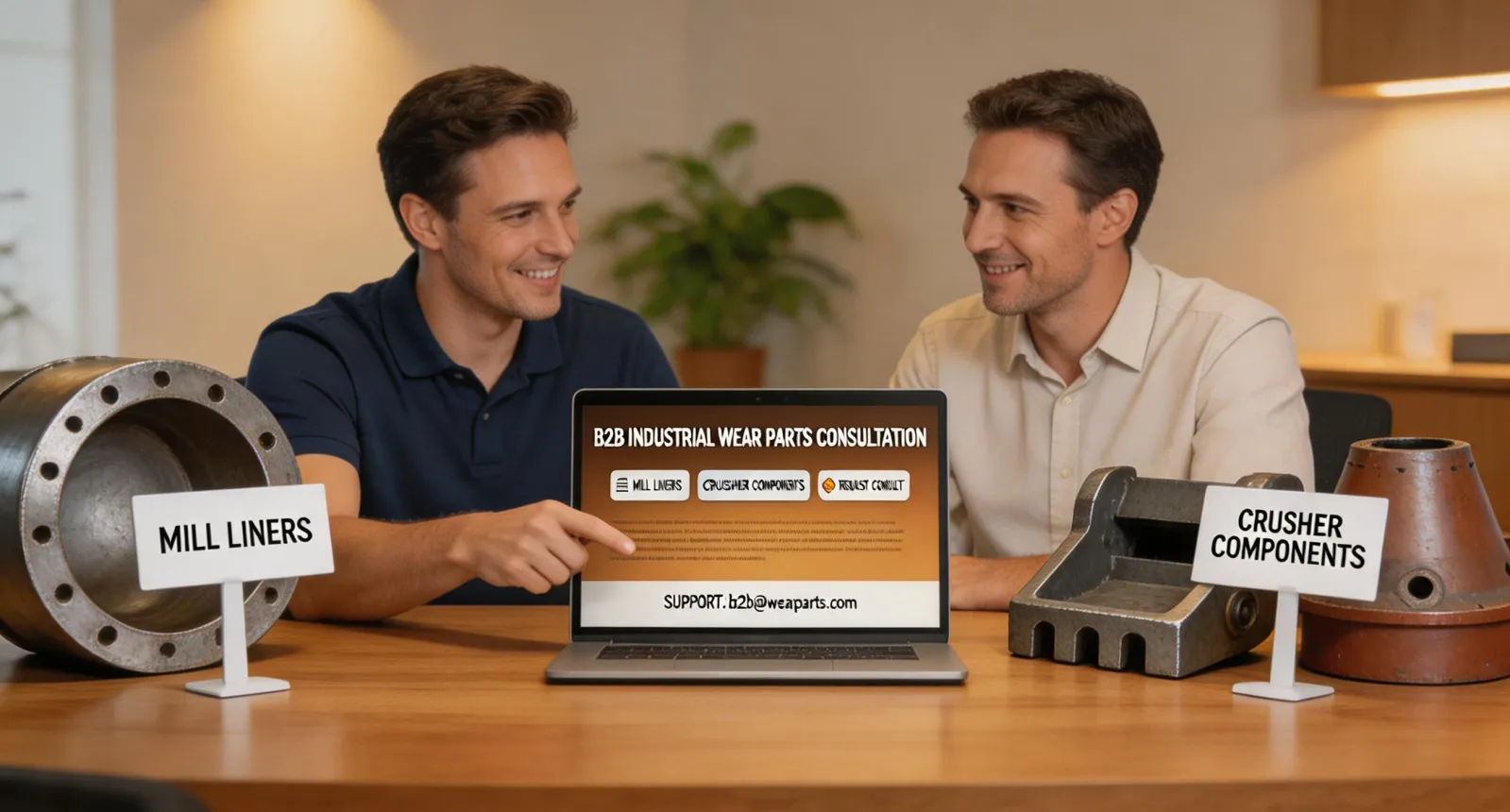
Friendly Advisor
Wear Parts Selection Feels Easier When The Process Logic Is Clear
FLSmidth guides maintenance and process teams through liner, media, and wear-part choices with clear tradeoffs instead of overloaded catalogs.
FLSmidth guides maintenance and process teams through liner, media, and wear-part choices with clear tradeoffs instead of overloaded catalogs.
FLSmidth starts by slowing the conversation down just enough to understand where loss is happening and what kind of change a site can realistically absorb.
Some sites are fighting impact, some are fighting abrasion, and some are really fighting poor part fit or uneven feed behavior. We separate those causes before we suggest a material or profile change.
A theoretically better part is not always a better plant decision. We review access, labor, shutdown length, and restart pressure so selection decisions match maintenance reality instead of only laboratory expectations.
Those outcomes overlap, but they are not identical. By naming the priority early, we can compare the wear path that protects the metric your team is actually measured on.
Maintenance planners, process engineers, and procurement teams all need different proof. Our role is to frame the same decision in terms each stakeholder can support.
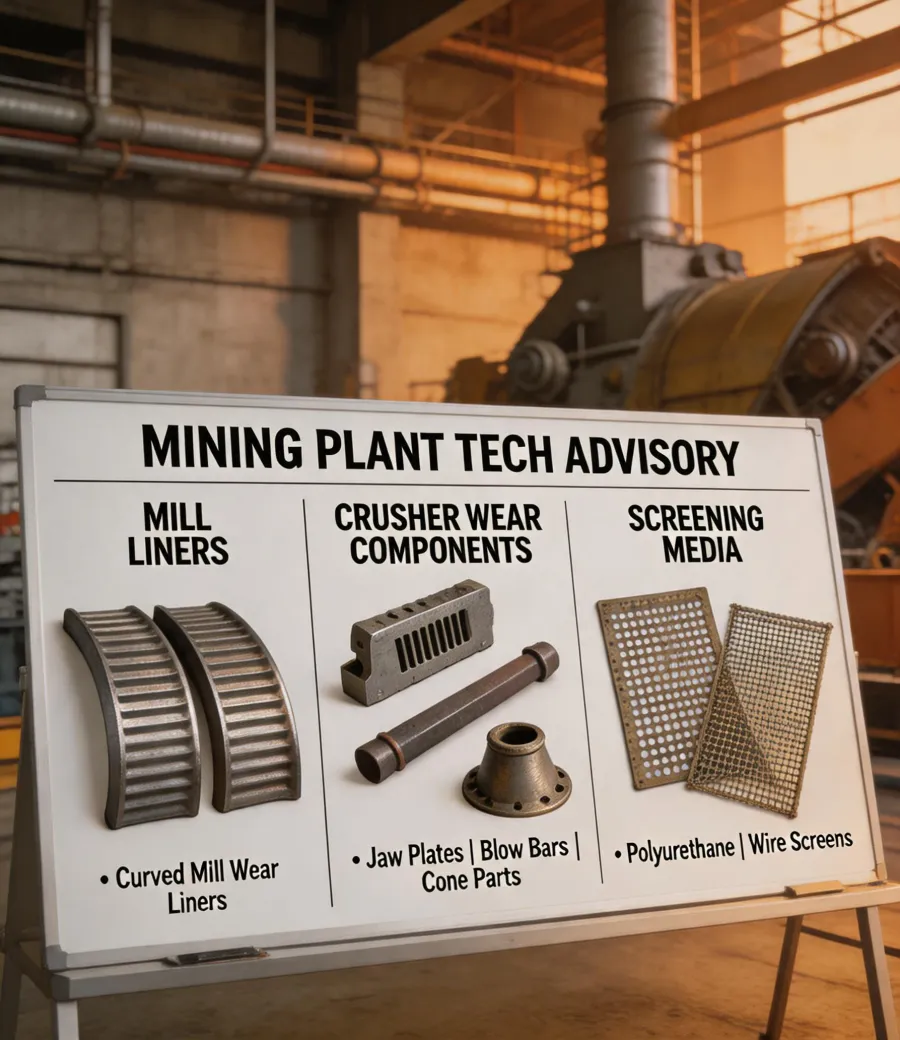
Our approach stays consultative, not generic. Every recommendation is framed around the plant context that decides whether a wear part becomes a gain or another operational distraction.
We focus on predictable changeouts, clearer spare logic, and realistic shutdown execution so planning teams can reduce surprises across repeated maintenance cycles.
We connect wear choices to throughput stability, particle shape, and plant balance so component selection supports the stage after it, not only the one in front of it.
We translate technical differences into a cleaner commercial picture by explaining where longer life, easier replacement, and steadier output do or do not justify the spend.
Instead of isolating one part number, we review how liners, media, and service support interact with labor availability, changeout access, and downstream process performance.
This comparison table gives teams one clear view of the tradeoffs we discuss most often when narrowing a wear strategy.
| Decision Lens | Lower Cost Per Ton | Longer Campaign Life |
|---|---|---|
| Best Plant Context | Best when changeout access is manageable and uptime pressure is moderate. | Best when shutdown windows are rare and wear events are hard to access. |
| Commercial Logic | Supports steady purchasing discipline and efficient replacement timing. | Supports fewer interventions when operational interruption is more expensive than part cost. |
| Operational Risk | Requires tight inspection discipline so parts are not pushed beyond useful condition. | Requires confidence that throughput and downstream behavior remain stable for longer runs. |
| Balanced Throughput View | Often the right decision sits between these poles, especially when the plant wants better process stability as much as better wear life. | |
“FLSmidth gave our team a practical way to compare liner life, labor, and throughput without turning the decision into a drawn-out specification fight. That clarity helped maintenance, process, and procurement align around one plan.”
Tell us what is wearing fastest, what you can realistically stop for, and what result matters most. We will help narrow the next step instead of sending an unfiltered parts list.
Share plant stage, maintenance window, and the result you want to improve so our team can respond with a practical next step.
Whether you are reviewing mill liners, crusher wear parts, or screen media, FLSmidth can help your team understand the decision before it becomes a rushed purchase.